

When it comes to buying a home, one of the most significant decisions you'll make is choosing the right mortgage. Two of the most common types of home loans are Fixed-Rate Mortgages (FRMs) and Adjustable-Rate Mortgages (ARMs). Each comes with its own set of benefits and considerations, and understanding the differences between the two can help you choose the option that best aligns with your financial situation and long-term goals.
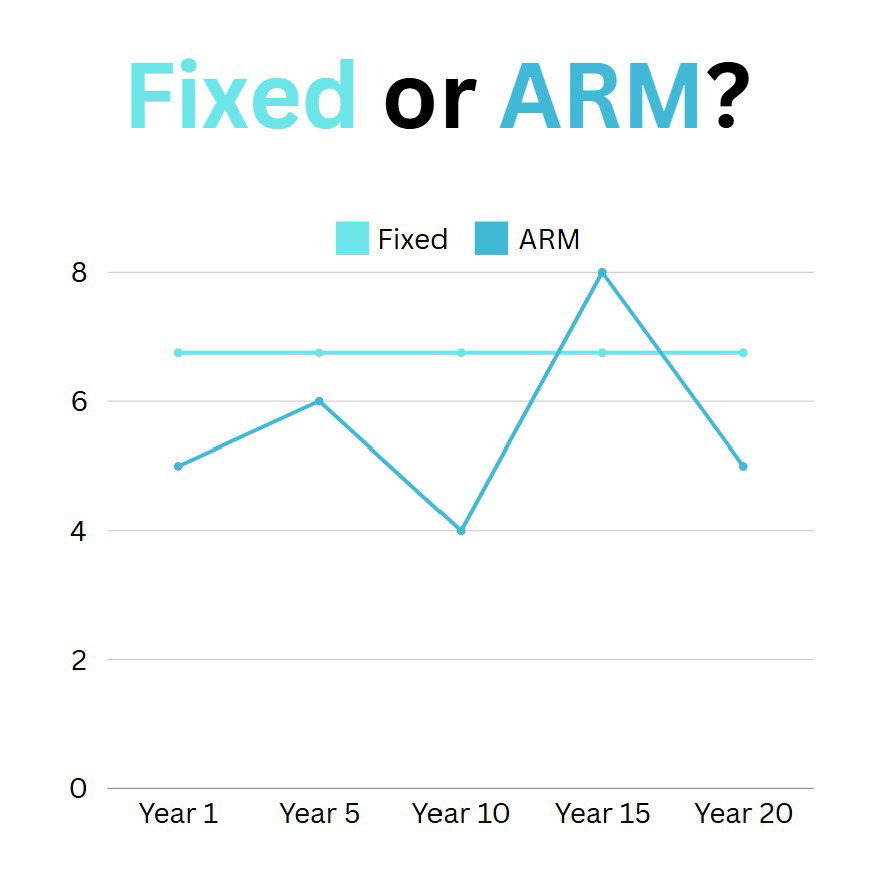
In this blog post, we’ll break down the key differences between fixed-rate and adjustable-rate mortgages, explain how they work, and discuss the advantages and drawbacks of each option.
What is a Fixed-Rate Mortgage (FRM)?
A Fixed-Rate Mortgage is exactly what it sounds like—a mortgage with an interest rate that remains the same for the entire term of the loan. Most fixed-rate mortgages come in 15-year or 30-year terms, although other options may be available.
How It Works: With a fixed-rate mortgage, you make the same monthly payment every month, and that payment remains consistent throughout the life of the loan. Your payment is divided into principal (the amount you borrowed) and interest (the cost of borrowing the money). The only thing that can change is the amount of property taxes and insurance included in your monthly payment, but the principal and interest stay the same.
Pros of Fixed-Rate Mortgages:
-
Predictability and Stability: Your monthly payments are fixed, making it easier to budget and plan your finances for the long term.
-
Protection Against Interest Rate Increases: Since your interest rate won’t change, you won’t have to worry about rising interest rates affecting your payment amount.
-
Long-Term Security: If you plan on staying in your home for the long haul, a fixed-rate mortgage provides stability over the years.
Cons of Fixed-Rate Mortgages:
-
Higher Initial Interest Rates: Fixed-rate mortgages generally start with higher interest rates than adjustable-rate mortgages, which could mean higher monthly payments upfront.
-
Less Flexibility: If interest rates fall after you secure your mortgage, you’ll still be locked into your original rate unless you refinance (which can come with fees and costs).
What is an Adjustable-Rate Mortgage (ARM)?
An Adjustable-Rate Mortgage (ARM) is a home loan where the interest rate can change periodically throughout the life of the loan, usually in relation to a specific index or benchmark rate. ARMs typically start with a lower interest rate for a fixed initial period, and then adjust periodically based on market conditions.
How It Works: An ARM might start with an initial interest rate that is lower than a fixed-rate mortgage, often for the first 3, 5, 7, or 10 years (depending on the loan terms). After that, the interest rate will adjust at regular intervals, such as annually. The adjustments are tied to an index, such as the LIBOR (London Interbank Offered Rate) or the SOFR (Secured Overnight Financing Rate), with a margin added by the lender.
For example, a 5/1 ARM means that you’ll have a fixed rate for the first 5 years, and after that, the rate will adjust once every year.
Pros of Adjustable-Rate Mortgages:
-
Lower Initial Rates: ARMs often offer lower initial interest rates than fixed-rate mortgages, which can mean lower monthly payments for the first few years of the loan.
-
Potential for Lower Rates in the Future: If market interest rates drop, your rate (and monthly payment) could also decrease after the initial period.
-
Great for Short-Term Homeownership: If you plan on moving or refinancing before the rate adjusts, an ARM can save you money in the short term due to the lower starting rate.
Cons of Adjustable-Rate Mortgages:
-
Uncertainty After the Initial Period: Once the initial fixed-rate period ends, your interest rate will adjust, and there’s no way to predict how high your monthly payments could go. If market rates rise, you could face significantly higher payments.
-
Payment Shock: If interest rates increase dramatically after the initial period, your mortgage payments could rise considerably, potentially straining your finances.
-
Complex Terms: ARMs can be more difficult to understand because of the various terms, including the initial rate period, adjustment frequency, and rate caps. Without careful understanding, you could end up with surprises down the road.
How to Choose Between Fixed-Rate and Adjustable-Rate Mortgages
When deciding between a fixed-rate and an adjustable-rate mortgage, it's important to consider your financial goals, how long you plan to stay in the home, and your comfort level with risk. Here are a few questions to ask yourself when making this decision:
1. How long do I plan to stay in the home?
-
If you plan to stay in your home for a long period (e.g., 10 years or more), a fixed-rate mortgage may be the better option for stability and predictability.
-
If you only plan on living in the home for a few years, an ARM could save you money in the short term due to its lower initial rate.
2. Am I comfortable with potential changes in my payments?
-
If you prefer knowing exactly what your mortgage payment will be each month, a fixed-rate mortgage is a safe bet.
-
If you're willing to take on some risk and are comfortable with the possibility of your payment increasing, an ARM may be a good choice, especially if you plan to refinance or sell before the rates adjust.
3. What is the current interest rate environment?
-
If interest rates are low and are expected to rise, locking in a low fixed rate might make sense.
-
If interest rates are high or expected to fall, an ARM could allow you to benefit from lower payments in the future.
Final Thoughts
Both fixed-rate and adjustable-rate mortgages have their advantages and drawbacks. A fixed-rate mortgage provides stability and predictability, while an adjustable-rate mortgage can offer lower initial payments and potential savings if market conditions are favorable.
Ultimately, the right mortgage for you depends on your financial situation, your long-term goals, and your risk tolerance. Be sure to carefully evaluate your options, talk to a mortgage advisor - here at BoniFi, we'd be happy to give you our take on the current market - and consider how each option aligns with your plans for the future. Whether you choose a fixed-rate or an adjustable-rate mortgage, the most important thing is that you make an informed decision that sets you up for financial success.